The Integrator: Summer 2021
A newsletter for ISS students, alumni, faculty, and staff.
Vol. 4, Issue 2 // Summer Quarter 2021
Image
Spotlight
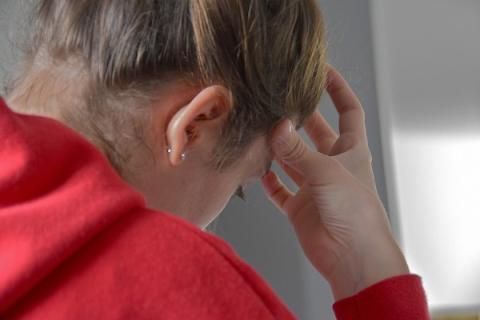
Greetings to our ISS community. It’s been nearly a year and a half since the pandemic started altering our lives, and as we approach more positive changes, we want to take some time to take stock of all that we appreciate. This issue of The Integrator focuses on gratitude. You’ll hear from faculty, staff and students about the ways that they have learned, struggled and grown. As Kristen Domonell documents for UW Medicine, practicing gratitude can have numerous health benefits, including better sleep, and contributes to overall happiness. So go grab your favorite snack and comforting beverage and find a place to sit and read this issue where you can take some deep breaths and relax. Enjoy!
The Year in Review
Image
As the new 2021-22 academic year begins to nose over the horizon, it seems only appropriate to pause and reflect on the past year rapidly receding in the rearview mirror. 2020-21 was a year for the history books - the year when many of us didn’t “go to work,” yet worked very hard, the year when nobody went “back to school,” but still continued to learn. For a brief space of time, thousands of University of Washington students, faculty, and staff joined the world of online learners and educators, discovering both the perils and the pleasures of the virtual classroom. And, during that brief time, numerous ISS students joined their “traditional” fellow Huskies in remote courses that normally would have been held in person. It was as if our collective world hung suspended in a moment that oddly tore us asunder from the familiar, and yet brought us together in a space that had heretofore been anything but common.
Let me be clear: Last year was tough. It was painful. It brought so much loss, fear, division, and exhaustion. It was not an experience any of us wish to repeat, and hopefully with good will and good effort, we will not repeat it. Getting through the pandemic year required all the strength we could muster, and so it was with considerable joy and pride that ISS graduated a record 88 students by the end of Spring. Eighty-eight of you supported your school-age children learning from home, worked and studied from home, remained enrolled even after losing jobs, got through courses while caring for ill family members, learned about social justice while living the effects of social injustice, and persisted in the face of sadness, isolation, and fatigue. The courage demonstrated by members of our program has been nothing short of amazing.
In spite of everything, or maybe because of everything, I feel grateful to be part of the ISS program and the College of Arts and Sciences. CAS has shown extraordinary faith in our plucky little program, lending support that will enable us to thrive this coming year and beyond. I am grateful to our most important champion, Dean George Lovell, for all he has done. I owe a debt of gratitude to my outgoing faculty co-director, Professor Deborah Porter for her feistiness in advocating for the well-being of ISS and its students, and for being a true partner in an endeavor so dear to our hearts. I am grateful to our Core Team of faculty, advisers, and our librarian who worked so hard, even in the midst their own serious illness and hardship, to give our students such a great learning experience. And we are all grateful for the honor of working with one of the most remarkable groups of students at the UW. It was a tough year, but it was a proud year, for all who call ourselves “ISSers!”
Staff Spotlight: Deborah Porter
Image
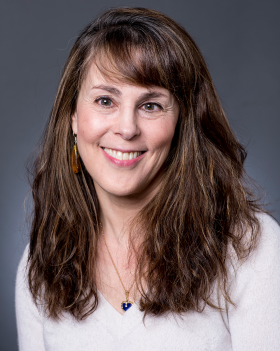
With gratitude and thanks we say a temporary goodbye to Dr. Deborah Porter, ISS co-director since autumn 2017. Here, Dr. Porter answers questions posed by her ISS colleagues about her favorite moments with the program, her sabbatical plans, and her return next year to teach a revised ISS course.
What drew you to ISS?
I was first drawn to ISS via an opportunity to develop an upper-level International Studies class that I could teach for the program. The process of developing an effective structure that would allow me to interact with students while respecting the asynchronous nature of the program was challenging and rewarding. I found myself able to use lesson planning, discussions and assignments, to articulate a clear path of learning. Interacting with students as they developed skill sets by watching international films and reading psychoanalytical theory was fulfilling beyond expression. I can honestly say that I have to credit the first three cohorts of students I taught with significantly influencing the way I structured a book based on the curriculum for the class (Collective Trauma, the Psychology of Secrets and Transnational Films. 2018. Routledge). I mention these students in the book's introduction!
After these positive experiences, when George Lovell, the newly appointed Dean of the College of Social Sciences approached me to direct the program, I was inclined to say yes because I love the program. However, I was not a fan of administrative work--or so I thought! Anyway, my interest in becoming more involved with the program's unfolding led me to agree to serve with Mel Wensel as co-director for a four-year term. And I am so grateful I did.
What were the high points of your time as co-director? What elements of the job did you love?
The high points of my time as co-director were those many instances where the core team's collaboration achieved important accomplishments that contributed to the health and value of our program. As I mentioned at the ISS 2021 graduation ceremony (woot woot grads!!), I have such awe and appreciation for the unique brilliance and talents that each member of our core team brings to work. The way these talents and personalities cohere to weave the magic of ISS education is something to behold. This talent explains why our small program's staff served in UW-wide leadership positions to support staff's transition to online provisions of services to get through the crisis conditions. Lastly, my working relationship with Mel Wensel was particularly rewarding. I have endless respect and affection for her, and I learned so much about the "sausage making" nature of the processes known as administration. She definitely shifted my perspective about administrative work, though a break will be welcome.
What’s your favorite Keyword, and did your own definition of that keyword evolve during your time with ISS?
This is a great question, and challenging as they change with every project. That said, I think I'd have to choose the one I ask my ISS students to think about: trauma. Inasmuch as it has helped me integrate my learning and thinking about cultural production, psychology, and human behavior over a career of three decades, the Keyword "trauma" has allowed me to marshal evidence from a range of disciplines. The concept's shifting meaning and value over close to a century and a half makes what is considered "traumatic" of interest. Scholarship in disciplines ranging from intellectual history, medicine, neurology, psychiatry, sociology, concur that the concept of "trauma" is a social construct that shifts in accord with the moral economy. Recognizing the link between sociopolitical, cultural and psychological conditions and the construction of a moral economy offers the potential to investigate and uncover the social and intersubjective mechanisms that shape our understanding of suffering. My research on early Chinese fiction; my research on contemporary films produced in Korea, Spain, United Kingdom and Russia; and my current research that draws from recent neuroscience findings, were all inspired by connections made as a result of my interest in the Keyword "trauma!"
What’s next for you? When will ISS students see you again?
I am about to begin a two-quarter sabbatical, during which I will complete and submit the manuscript of my forthcoming book, entitled The Evolution of Chinese Filiality: Insights from the Neurosciences. The book is due to be published by Routledge early 2022. After that is complete, I plan to use unstructured time to volunteer, read widely, catch up on movies, and travel to see family if pandemic permits. I have a project on the back burner involving an Italian novel and film that may percolate up to the level of motivation, but we'll see. Mostly, I anticipate the break will refresh my enthusiasm for teaching. I plan to see ISS students next summer with an updated course.
Thank you for this opportunity to reflect on my rewarding experience as co-director of ISS. I remain an ardent supporter and am excited by the program's bright future.
Staff Spotlight: Francis McCue
Image
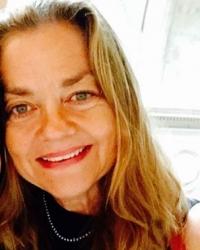
Most of the world knows Frances McCue as a distinguished American poet with a distinctly northwestern voice, as one of the prominent founding mothers of Seattle’s literary arts center, Richard Hugo House, or as a beloved writing teacher in both the UW’s English and Honors programs. Few suspect that since 2013 Frances has led a double life as a guiding light of the Integrated Social Sciences program. Along with then divisional dean Judy Howard and ISS program director Matt Sparke, Frances helped to design ISS, using her creativity and knowledge of portfolios as both production and pedagogy to envision the ISS core curriculum. The core course sequence that engages students in foundational learning in the social sciences and on-going introspection traces its lineage straight back to the mind of Frances McCue.
Since those heady days of new program creation, Frances has continued to inspire and nurture learning in ISS. Starting in 2017, Frances returned to active duty in ISS, beginning a Spring Quarter tradition of teaching both ISS 401 and the advanced research writing course, ISS 381. Her deep understanding of how portfolios engage students in meta-cognitive learning has helped to develop ISS 401 into the robust capstone experience that it is today.
This Spring was Frances’ final quarter of teaching ISS students before returning as a full-time Teaching Professor to the Department of English. All of us in ISS are deeply grateful to Frances for her leadership, her teaching, her tireless advocacy for ISS, and for her friendship. There’s something special about a dinner at Frances McCue’s house because it embodies her method of work as a teacher and as a poet, drawing those around her into a warm circle of light and sustenance. We are honored to have sat at Frances’ table for so long.
ISS Graduation Celebration
On June 13, 2021, the ISS team hosted an online celebration to recognize the 88 students who graduated from the program this year. ISS co-director Mel Wensel initiated the festivities with admiration and appreciation for the program, and a recognition of the unique challenges the graduates had to overcome to earn their bachelor’s degrees.
Our special guest speaker, Dr. Vicente Raphael, Professor in the Department of History, shared his views on the importance of a degree in the social sciences, as the graduates use their knowledge to navigate and curtail the challenges in society.
Professor in the Jackson School of International Studies and Co-Director of the ISS program, Dr. Deborah Porter, shared a heartfelt reflection on her years in the ISS program as she acknowledged those that make the program special and linked her experience to one of her favorite novels in literature.
Many of the graduates joined the ISS staff and faculty in a virtual watch party during the live event. It was wonderful to hear their stories and more of their future plans, as we celebrated the class of 2021 together!
Student Reflections on Graduating in 2020/21
Image
Amie
Remaining focused on earning my bachelor's degree amid the many challenges of 2020 and 2021 was no easy task. Taking part in the ISS program during this time gave me a broader awareness of what was, is, and continues to be going on in the world. It also made me realize the value and importance of utilizing interdisciplinarity when examining social problems, big or small. Through my studies, I was able to look at situations that my family and I have experienced through a different and more knowledgeable lens. In many ways, taking this journey during a global pandemic and social distancing provided me with a sense of connection, comfort, and solace. The discussions I had with my professors, advisors, and classmates made me feel like I was part of something bigger than myself. Instrumental in my ability to make it through to graduation was my family and a desire to accomplish a long-time personal goal. I wanted to show my two daughters the importance of education and that it is never too late to fulfill your dreams. My parents gave me an extra nudge to get started, and my two daughters cheered me on every step of the way. Whenever I felt stressed or overwhelmed, my family stood by my side and cheered me on. I am forever grateful to them and to everyone I interacted with while on this eye-opening journey.
Vincent Savery
My final year of the ISS program was extremely rewarding and stress full at the same time. It was my 7th year in the ISS program and I was hoping for a coast to the finish, this was not to be and thankfully so. It was in the final year I was able to cement my true interest and ambition as an Anthropologist and to focus my dialogue in that direction. I would like to thank all the ISS staff, instructors and fellow students in guiding my discovery. I would also like to thank the ISS program developers as without this method of study my academic ambitions would still be in the dreamer category. The Covid epidemic seemed to just strengthen the resolve I felt as the foundation was already in place to complete the program, this is the way for equality in education to go forward; the equity we all were a part of as students was without equal. If you are reading this as a prospective student I encourage you to wait no longer.
Lauri Hennessey
Thank you to the ISS program for helping me finally get my degree, 35 years after I left UW. So many of my friends had a harder time than I did during the last 18 months. A big part of that is because of my own privilege. I was able to work from home at my nonprofit and my family is all healthy. However, one of the reasons the pandemic was different for me was because of this program. I looked forward to the weekends, when I could study. I was learning about Oceanography or Social Science or Livable Cities. I was working on my portfolio, researching Institutional Racism. ISS was just what I needed during the last year and a half. This program re-ignited my love for learning and now I am working on my Master's in Public Interest Communications. I will never forget it. Thank you, ISS!
ISS Bulletin Board: News, Events, Dates, Announcements
Key Dates
Here are a few important dates, as well as a link to the 2021/22 UW academic calendar:
- Autumn registration is now open (period II)
- Summer quarter ends on Friday, August 20th
- ISS orientation will open for new ISS students on Wednesday, September 8th
- Autumn classes begin Wednesday, September 29th
Standout Staff:
- In November 2021, ISS Alum, Cara Phillips, and ISS Librarian, Reed, will present a paper outlining their Participatory Design Project at the 14th International Conference on Performance Measurement in Libraries.