The Integrator: Winter 2022
A newsletter for ISS students, alumni, faculty, and staff
Vol. 5, Issue 1 // Winter Quarter 2022
ISS Alive and Thriving!
Although 2020 may linger in our collective memory as a bad dream, for the Integrated Social Sciences program, the 2020-21 academic year was a surprising success story. During the height of the first wave of Covid-19, enrollments in the online bachelor’s degree completion program increased. Combined with some budget restructuring by the College of Arts and Sciences that led to reduced operating costs, ISS emerged from the fiscal year in excellent condition and is firmly on its way to the goal of being self-sustaining. We hired two fantastic new core faculty, welcomed a new program co-director (see “Meg Spratt Named ISS Co-Director” in this issue of The Integrator), and a new Admissions and Outreach adviser. All these positive developments give ISS a bright outlook for 2021-22 and beyond.
The time has now arrived for ISS to make strategic curricular reinvestments. This is an exciting moment in the history of our program! Priorities include updates to ISS 301: Social Science Theory in Context which will imprint the exciting scholarship of our newest core faculty, Assistant Teaching Professor Janine Slaker and Assistant Professor Rebakah Daro Minarchek, onto the course. ISS 302: Survey of Social Science Methods will also receive revisions with freshly developed course modules. Major revisions to some thematic area courses will also begin as early as Summer 2022, enabling faculty to update course content and integrate the online pedagogical know-how they have developed over time. Finally, ISS plans to expand and diversify the major curriculum, introducing new courses and faculty into the already robust lineup.
This year ISS also diversified its staff with the addition of a dedicated Admissions and Outreach Adviser, Holly Arsenault, who previously served as the Director of Engagement for the UW School of Drama. Holly has taken on the important task of communicating with prospective students and doing outreach work within and outside the UW community. Holly’s work helps to ensure that ISS continues to provide access to a quality UW education and frees up the rest of the advising staff so they can focus on providing outstanding support to current ISS students.
The final piece of good news this year is that ISS has begun advancement work with the creation of the Friends of Integrated Social Sciences Fund to which some generous alumni have already contributed. The hope is that the fund will eventually generate sufficient resources to provide much-needed direct support to students in the form of emergency grants or other help. ISS supporters who would like to contribute can do so through the program web site.
Thank you to our students, the teaching faculty from across the social sciences division, and all the many supporters of ISS who have worked to create such a bright future for ISS!
Meg Spratt Named ISS Co-Director
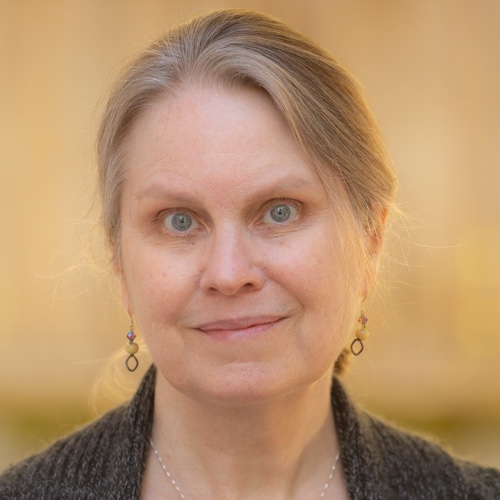
In Autumn Quarter 2021, the Integrated Social Sciences program welcomed a new faculty co-director, Associate Teaching Professor Meg Spratt (Department of Communication). Professor Spratt succeeds Professor Deborah Porter (Jackson School of International Studies) who served as faculty co-director from Autumn 2017 to Spring 2021. In 2017 ISS transitioned from more traditional departmental leadership in the form of a single faculty Director to a more fully integrated model that creates a co-directorship of a faculty co-director position and a staff co-director position filled by the Director of Academic Services (currently Mel Wensel).
Professor Spratt has a long history as a scholar and teacher in the UW’s Department of Communication, earning her Ph.D. in journalism in 2002. She has over 30 years of experience as a journalist and journalism educator, working as a reporter and editor in San Francisco and Los Angeles before moving to Seattle. Professor Spratt’s research interests include news coverage of tragedy, media representations of race and gender, and influences of photojournalism on our perceptions of identity. She joined the ISS program as a member of the core teaching faculty in 2016 and was instrumental in a major revision of the core curriculum in 2017-18. In ISS, she teaches all five of the core courses and COM 304: The Press and Politics in the United States. Professor Spratt brings to ISS leadership a keen eye for curricular design, strong commitment to adult learners, and dedication to leading the way in online undergraduate education at the UW. We are grateful to Professor Spratt for serving as co-director at this critical juncture in ISS history as we prepare for thematic areas course revision and new course development.
Portfolio Voices
Portfolio Voices highlights the experiences of our outstanding students in creating their portfolios. This quarter faculty Dr. Janine Slaker talked with two ISS students, Danica Tongol and Sonia Monet Saxon about their keywords interests, research, and how ISS has helped them to form future plans.
Danica Tongol
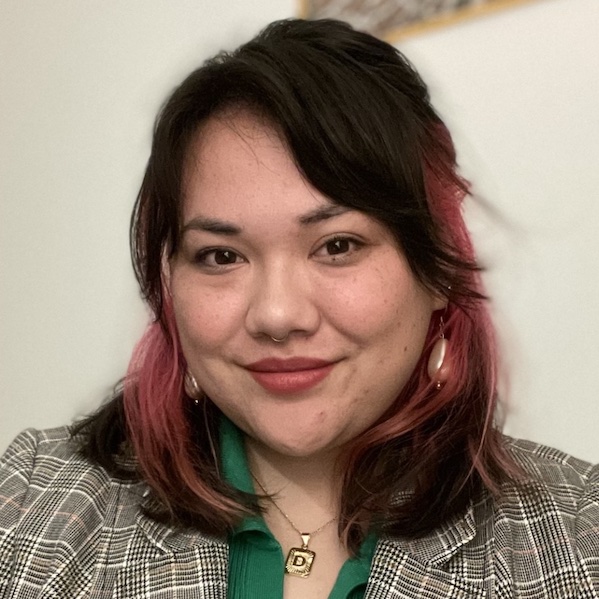
Bio: My research area is sociology, specifically drawing on themes of intersectionality and social hierarchies. I hope to direct my research toward how to best identify and support marginalized student populations. I have been applying to masters programs in sociological research.
What resources (UW, ISS, or beyond) have you found most helpful in your pursuit of applying to graduate school?
My professors have been my best resources! They have been able to walk me through some of the nuances of graduate programs, the climate of academia, and best practices for applications, all from their personal experiences. Having candid conversations with my professors about my interests and questions has allowed me to really hone in on the kinds of programs that would most refine my academic training.
How have the development of the ISS keywords informed your research plans/graduate school trajectory?
Developing keywords as part of ISS has been an amazing tool to look at my interests up close and as a big picture. It can be hard to balance specific interests with what you’re gaining from such a diverse set of courses, so keyword development operated as a way for me to tie all of my classes together with their shared threads. I’ve found that I am so much more comfortable with sifting through complex or nuanced theories after learning how to develop my keywords.
What is one challenge from this process that you hadn’t anticipated, and do you have advice you can share to others regarding how they can overcome that challenge?
I’ve had to put a lot of energy into developing and managing my own timelines in classes and graduate applications alike. I have always seen myself as organized, but the fully online aspect of ISS has challenged me to both create and enact my to-do lists in a very different manner. It’s easy to burn out when you put yourself on impossible schedules or when you don’t utilize your resources. Be patient with yourself! Prioritizing communication and respecting my “down time” has made all the difference for me!
Sonia Monét Saxon
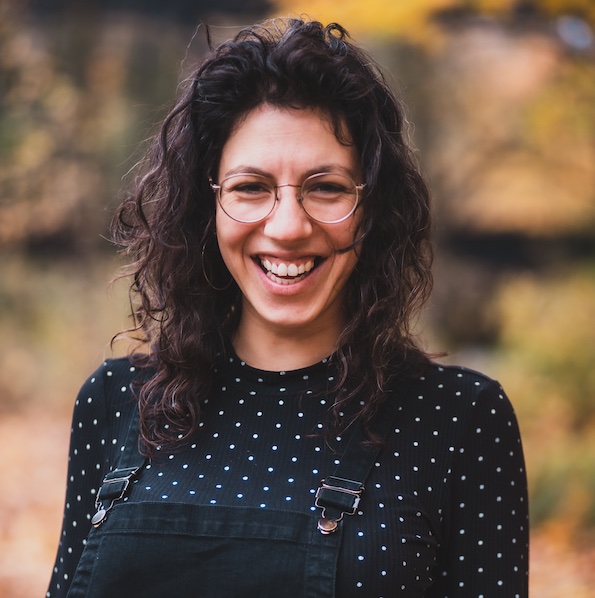
Bio: My research area is medical anthropology, environmental health and toxicity, STS (science, technology and society studies). I'm interested in investigating cultural elements of medical communications, community action research, and affliction and illness experience. Most of the programs I am applying to are sociocultural anthropology PhD programs. I'm also applying to a couple of interesting looking interdisciplinary PhD programs centered around STS.
What resources (UW, ISS, or beyond) have you found most helpful in your pursuit of applying to graduate school?
I've found the ISS program to be helpful in my pursuit of applying to graduate programs by helping me clarify what my deepest research interests are. The exposure to multiple disciplines was great for me as someone who was not so sure of where I wanted to go with my research desires in the social sciences. I had little concept of how anthropology can be applied to public health until I took one of the ISS thematic classes and learned about medical anthropology. The portfolio project sparked a confidence about presenting myself to an academic audience. Having the same professor for the portfolio project for multiple quarters helped me feel known and supported. The faculty and my advisor in the ISS program have been immensely available and enthusiastic about supporting my application process. Helpful tip #1: Look at the research that has been done in the field you are interested in to see how research is framed (keywords).
How have the development of the ISS keywords informed your research plans/graduate school trajectory?
At some point in the process of looking at graduate programs, I had an aha moment of just how often everyone is using keywords in describing their research. The development of keywords in the ISS core classes gave me a chance to scope out what kind of research is relevant to what I'm interested in. Who else studies what I'm interested in and what keyword do they call it? What's going on with the latest research about my keyword? This quarter, I picked keywords to develop that are the same words listed as my research interests and the curriculum came full circle. The keyword assignments became an abstract part of my graduate program application process and were very helpful. I get the impression that one's research interests as keywords are somewhat of a second name in academia and if I was at a party, people would ask me about my identifying keywords (in the form of "research interests").
What is one challenge from this process that you hadn’t anticipated, and do you have advice you can share to others regarding how they can overcome that challenge?
I didn't anticipate the challenge of how hard it is to close the book on a personal essay for a graduate school application and call it done. It's taken a lot more time than I thought it would. At the moment of writing these words a week before the deadlines, it's not done. I can't think of another time that I've reworked any of my writings this much. I get the impression that the power you wield on an application is in framing what it is you're all about. There are so many ways to say what you are trying to say. My material continues to change and improve as my ideas of what's relevant is expanded upon by research and by the help and good graces of mentors who are familiar with the process. My advice would be to start months earlier than what you may consider starting early (at least five months before the deadline!). Also, as a first step, seek the input from as many mentors as possible to get input about your research interests and what people in your chosen field are looking for.
Alumni Profile: Courtney Ortañez
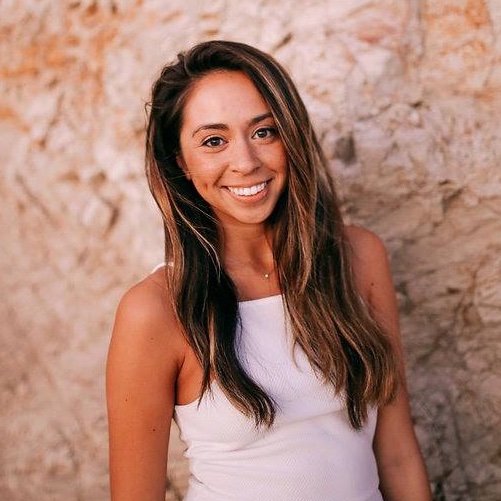
BA, Integrated Social Sciences, 2021
Coming into the ISS program, my goal was to achieve the credentials needed to take my career on a path more aligned with my interests, values, and passions. Numerous courses in the ISS program greatly impacted me, particularly 'Political Ecology of the World Food System,' with Professor Rebakah Daro Minarchek. This course opened my eyes drastically to the levels of imbalance, overproduction, and overconsumption (of highly processed food items!) perpetuated by the current food system. Following this course, I did some work with the University's American Indian Studies Department, or the Living Breath of wǝɫǝbʔaltxʷ: Indigenous Foods and Ecological Knowledge Food Symposium, which highlights Indigenous community wisdom about food and food production methods. This experience and my course learnings sparked an even stronger desire within me to follow a career path that is in direct alignment with my values.
New ISS Student Hub Launched
The core team is pleased to announce the “soft launch” of the ISS Student HUB. Thursday, January 27th we invited our currently enrolled students into this new community and resource space housed in Canvas. While we envision multiple phases of content development, there are already a great many resources in the ISS Student HUB about degree planning, registration, resources and support, research and libraries, opportunities and community at the University, graduation and more! Students will also find a quick link to our academic advising page for access to the advisers’ online appointment calendars. Future steps include developing spaces for student interaction in the discussion board and integrating the announcements feature with program communication to students. We welcome feedback on the HUB!
Bulletin Board:
Here are a few important dates, as well as a link to the UW academic calendar:
- Period I Spring registration opens February 11 - 24, based on class standing.
- ISS orientation will welcome new ISS students beginning on March 7.
- Winter quarter classes end on March 11, with exams the week following.
- Spring quarter classes start on Monday, March 28.
- Graduates, save the date! Graduation festivities will take place the weekend of June 11-12, 2022. Details to come...!
Staff & Studnet Highlights:
- ISS alumni Cara Phillips and ISS librarian Reed Garber-Pearson published an article about their online participatory design project.
- ISS faculty Christian Novetzke was recently awarded a fellowship from the National Endowment for the Humanities.
- Professor Scott Radnitz was recently interviewed for his commentary on the evolving situation on the Russia-Ukraine border.