STUDENT VOICES: ALEX PEDER, CORRIO, AND H.O.P.E.
ISS has always thrived because of the diversity of students and the richness of their experiences. This Integrator Voices column features an interview with Alex Peder, who entered the program in Spring 2019, and whose work involves integrating communication technologies to foster deeper connections among incarcerated people and family. He asserts that sustaining links between prisoners and family is key to developing bonds that support accountability, which itself is a “foundation of hope” for successful post-incarceration life strategies.
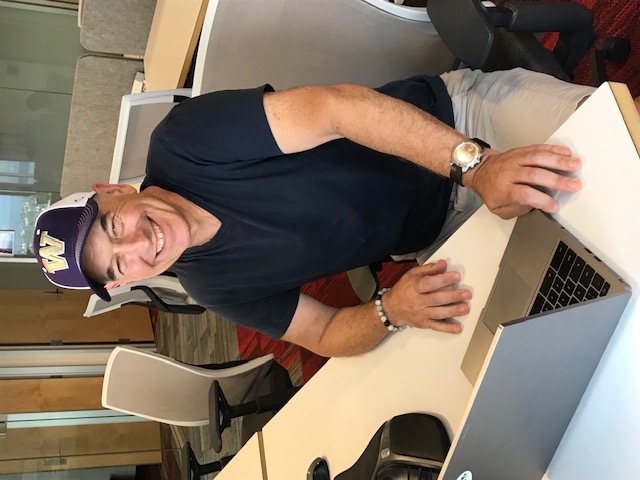
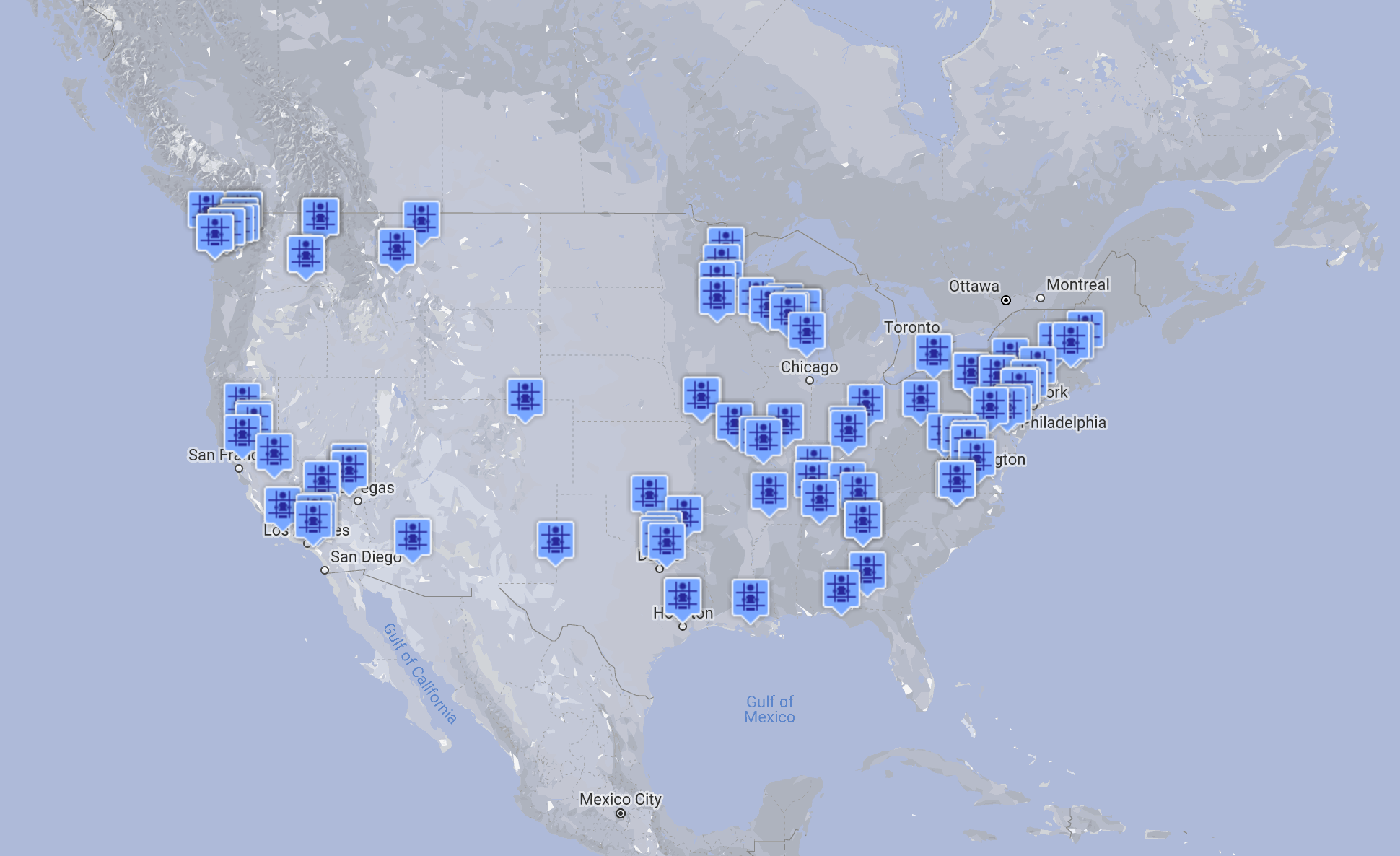
Alex speaks from first-hand experience, having recently reentered society after having served a sentence at the Washington Correctional Complex in Monroe (MCC). While incarcerated, Alex observed how prisoners were deprived of access to expressions of love and support from families and friends because of the lack of integration between phone systems “on the inside” and those “on the outside.” Recognizing the enormous positive power of facilitating such expressions, which can infuse joy into a prisoner’s day, and as a result, improving safety and security at the institution. Alex, along with creative and business partners created Corrio, a voicemail service. Devised in stages where ideas were written and shared on napkins in the prison visiting room, Corrio allows families, friends and professionals (where law dictates no monitoring) to stay in touch with inmates in jails and prisons in a way more akin to how we interact on the outside.
This "game-changer" service has also been developed for Spanish speakers, initially funded by ICE to allow immigrant asylum seekers held in private detention camps. Corrio works in partnership with its non-profit fiscal sponsor, Social Good, thereby allowing donations into these programs to be tax-deductible. It is offered free to attorneys representing detained individuals and their families and children, who could not otherwise connect with someone inside the detention center. Moreover, there is the possibility that Corrio could be a vehicle for delivering mental behavioral healthcare, allowing outside mentors, such as AA sponsors to leave encouraging messages for incarcerated subjects, which have the power to light up one's day. The transformative potential of this idea was acknowledged by the U.S. Patent and Trademark Office, who granted a multiple, non-provisional utility patent.
This is also why the venture is getting serious attention, and why it was slated to be featured at the SXSW festival. The selection process by which Alex’s petition to introduce Corrio as a communication tool was chosen provided objective affirmation that this service met an important need. Alex's commitment to expanding opportunities for incarcerated people to connect with the outside world extends to the realm of online education as well, through the organization Huskies for Opportunities in Prison Education (H.O.P.E.).
H.O.P.E. is a seven-year old program run by a group of UW students who advocate for accessibility to education behind bars as a means to reduce recidivism and to provide prisoners with intellectual tools that will facilitate social reintegration after incarceration. It grew out of a 2013 UW Honors course developed by Professor Claudia Jensen, which matched UW students with selected inmate learners to work on collaborative projects to reduce recidivism. One of the projects the students came up with was the UW student group HOPE, which was a partner group with an inmate advisory board called Bridges. Derek Boyd, who was incarcerated with Alex at the Twin Rivers Unit within the Monroe Complex, and is currently a Senior at the Foster School of Business, along with UW student Dashni Amin, collaborated in a project that culminated in the establishment of the Bridges inmate advisory group. This ultimately evolved into Bridges to Hope.
(Alex Peder Photo)
Alex petitioned and received permission to participate in the program the following year. It was at that time that UW President Ana Marie Cauce also happened to make a visit to Twin Rivers Unit, where she encouraged prisoners to pursue post-secondary education. Alex credits this confluence of serendipitous events with catalyzing his interest in completing his college degree at the UW, and for steering him toward the work of providing post-secondary education “long before the day one begins a reentry program, or even a few months before. Communication is the key component to such a foundation, Alex asserts, “from the first day a prisoner enters the system.” This belief drives his most recent work with H.O.P.E.
Alex graciously agreed to speak with me about his work and some interesting connections that link it to ISS educational objectives.
Deborah Porter: As a co-founder and chair of H.O.P.E., with Derek Boyd, you are currently involved in raising awareness about “system-affected” students, be they former prisoners, or friends and family of one. Can you describe your work and objectives?
Alex Peder: Raising awareness about the demographic of system affected students is the first step toward providing the educational services that H.O.P.E. strives for. It was astonishing to me that the UW diversity blueprint does not include any mention of previously or currently incarcerated people. I assumed that H.O.P.E.’s mission would be of interest to people, but who? Where are they?
I realized that a survey is how you find these answers. I thought I knew how to do this because of business experience, but I discovered that there are quite a few unexpected considerations that required me to rethink some of my assumptions. It was important to tap different resources that would allow me to put together what would be validated by the Educational Assessment Office as containing a legitimate set of questions. UW Surveys helped out a great deal, ultimately leading to the survey’s distribution on MY UW and many social media sites associated with UW, such as ASUS’s Instagram page. Thanks to full support for the mission from UW’s three campuses, we were able to make much progress.
DP: What was the survey deliberation process like?
Alex: We had to start from scratch, we designed a form and questions. Then we reworked questions, both in terms of their sequence and in terms of their substance, at least twenty times. We sought advice from experts on how to ask questions that were not leading, so as to produce results that communicate something meaningful to UW leadership.
DP: Any sense of what the data reveals?
Alex: We are still in the midst of conducting our survey, so it is premature to say, but there are indications that there is a substantial number of system-affected in the UW Seattle campus population. I’ve also seen signs that a high percent of respondents chose to accept an invitation to add additional thoughts, which suggests there is interest in bringing their experience into a discussion about UW efforts to support learning in prison long before prisoners are released. The hunger for this access within the prisoner population is almost impossible to describe. The survey results will help guide future efforts, and we are grateful for the administrative support throughout the process.
DP: The skill sets that you have used to navigate and transcend your incarcerated experience led to the development and production of Corrio. What skills or concepts proved to be most important along the way?
AP: When I reentered society a primary intention was to rehabilitate my academic objectives and aim for a UW degree, which I had committed to doing decades earlier during the phase of my business career prior to incarceration; this was reaffirmed while I was incarcerated as a promise to myself and my two children who are now both adults. .With the help of some academic counselors, I was able to complete coursework necessary to apply to the Integrated Social Sciences program. The post-prison education process solidified for me that social science studies was the direction I wanted to go. It was a shift from business; a social science degree would help promote Corrio not as an investment but as a vehicle for change. The efforts to build and design it have meaning because it reflects the real needs of people on the inside to have ways to connect with relations on the outside. It is not necessary for prisoners to fight for phone resources. Using a simple messaging system, creating a messaging platform, allows prisoners to participate in what we on the outside consider everyday normal communication. For me, Corrio as an enabling assistive program.
When I look back to think about my thinking regarding the development of Corrio, I see that an organizing theme of my decisions and efforts to produce the system is to change prison conditions that deprive prisoners of expressions of love and support from those on the outside. I realized the issue was not merely technical, even though such challenges are often used to dissuade efforts. The challenge was and is to dismantle an institutional mindset the obstructs prisoners from developing accountability, which is essential for healthy reentry. These realizations were accretive over time, and matured as I applied what I was learning about how others felt about communication between prisoners and people on the outside. All of this describes the process that led to the development of Corrio, becoming a UW student, Co-chair of H.O.P.E., whose primary mission is to ensure that post-secondary education begins in prison, not post-prison.